


No products in the cart.
Introduction
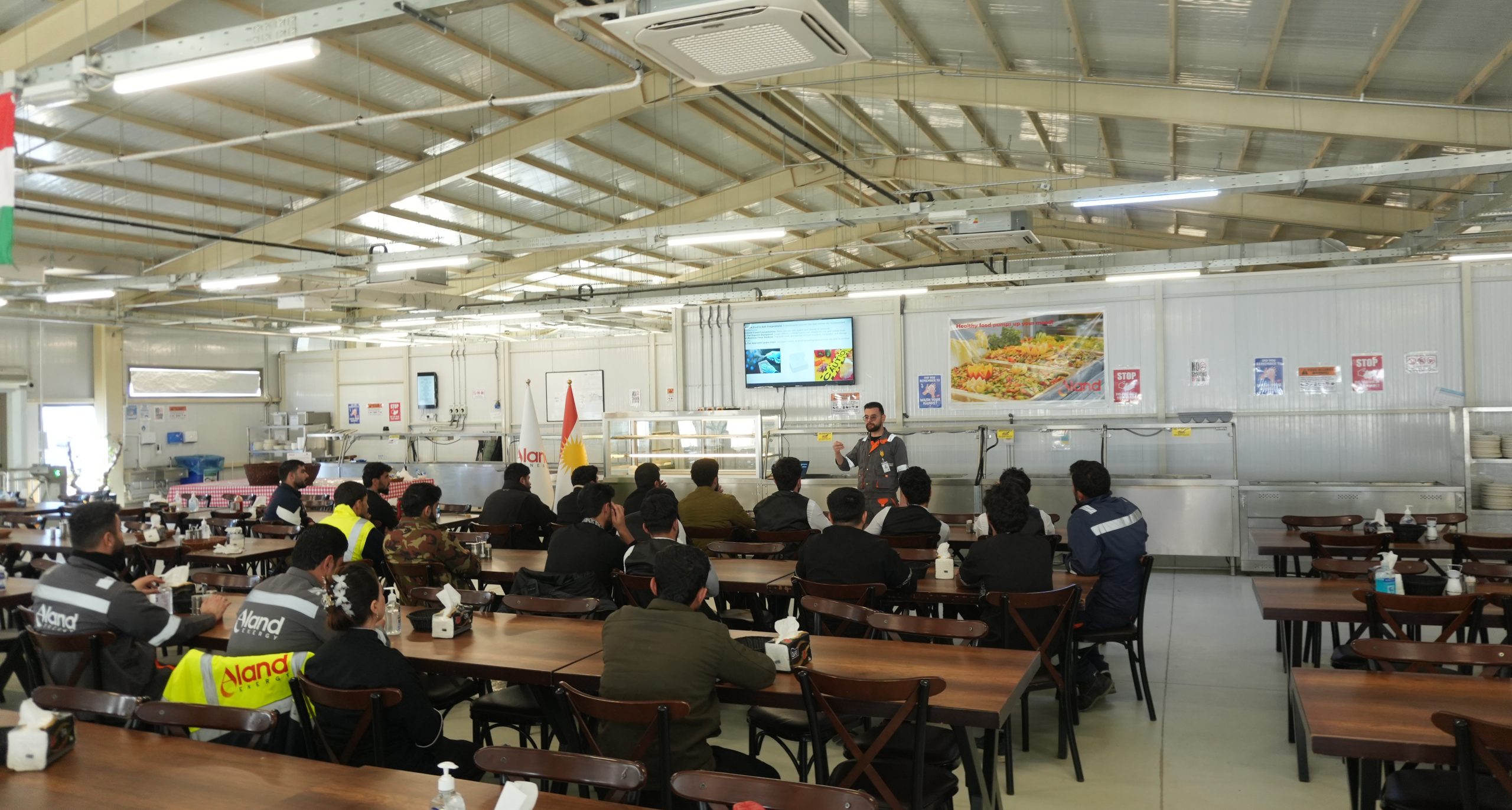
In today’s fast-paced environments—such as construction sites, oil and gas fields, camps, and institutions—large-scale catering is more than simply providing meals. It involves planning, preparing, and serving thousands of safe, nutritious, and high-quality meals every day.
At this scale, strict hygiene and food safety standards are essential. Even minor lapses can affect employee health, reduce productivity, and erode trust in service providers. For organizations that rely on large-scale catering, maintaining these standards is critical for operational efficiency, workforce well-being, and overall corporate reputation.
Aland Energy, operating across Iraq and the Kurdistan Region, understands that catering is not just about feeding people—it is about protecting their health, supporting energy and focus, and delivering safe meals consistently. By integrating internationally recognized standards such as ISO 22000, Aland Energy ensures that hygiene and food safety are central to every operation.
.
Why Hygiene Matters in Catering
High hygiene standards in large-scale catering provide multiple benefits for both employees and organizations:
- Health and Well-Being: Safe meals reduce the risk of foodborne illnesses and support workforce productivity.
- Trust and Reputation: Reliable hygiene practices reassure clients, business partners, and employees that quality and safety are non-negotiable.
Aland Energy’s Commitment to Hygiene
Aland Energy integrates hygiene and food safety into every step of its catering services. Compliance with ISO 22000 ensures meals are prepared, stored, and served according to internationally recognized standards. ISO 22000 adopts a risk-based approach, applying HACCP principles and critical control points to identify, evaluate, and control food safety hazards across all processes. Key practices include:
- Regular sterilization of kitchens, storage areas, and serving equipment.
- Strict quality checks on ingredients from supplier to service.
- Food sampling conducted by HSE teams to ensure every meal meets safety and hygiene standards.
- Continuous staff training in food hygiene and occupational safety.
- Documentation systems and waste reduction measures that support both hygiene and sustainability.

Beyond ISO 22000
While ISO 22000 forms the foundation for food safety, Aland Energy also operates within an integrated management system including:
- ISO 45001 – Occupational Health & Safety
- ISO 14001 – Environmental Management
- ISO 9001 – Quality Management
This integrated approach ensures that Aland Energy delivers catering services that are safe, reliable, and sustainable under all conditions.
Conclusion
In large-scale catering, hygiene is the benchmark of success. Through ISO 22000 and its integrated management system, Aland Energy provides meals that are not only safe and hygienic but also support employee health and productivity, while building long-term trust with clients across Iraq and the Kurdistan Region.
Next Post
ISO Certifications Renewal
Related Posts
January 15, 2026
ISO Certifications Renewal
Introduction Aland Energy has successfully completed the renewal of its internationally recognized ISO certifications, continuing…